
Blog
West Bloomfield Waterfront Guide for Buyers
November 25, 2026
In this article
A waterfront address in West Bloomfield is not one single product. It can mean direct frontage on a large all-sports lake, a wooded canal leading to open water, a smaller lake with limited motor use, or a home with shared access several streets away. This West Bloomfield waterfront guide focuses on the details that affect value, daily use, financing, and future resale – before an attractive view turns into an expensive surprise.
Start With the Type of Water Access
The first question is not simply, “Is this a lake home?” It is, “What rights transfer with this parcel?” A true lakefront property generally carries frontage directly to the water. That may include riparian rights, which can affect the ability to install and maintain a dock, place a boat lift, or use the shoreline. The exact rights depend on the deed, survey, municipal rules, lake regulations, and any recorded restrictions.
A canal-front home can offer a dock and a route to a larger lake, but navigation depth, bridge clearance, seasonal water levels, and travel time matter. Canal frontage should be evaluated as its own category rather than priced as identical to broad open-lake frontage.
Lake-access homes are different again. Some properties have deeded access through a beach lot, private park, or association easement. Others may be near a lake without having any legal access at all. Proximity is not a substitute for documented rights. Ask for the recorded easement, association documents, annual dues, access rules, parking limitations, and any restrictions on docking or storing watercraft.
West Bloomfield Waterfront Guide: Lakes and Settings
West Bloomfield Township has a wide range of waterfront settings, including properties associated with Cass Lake, Orchard Lake, Pine Lake, Walnut Lake, Union Lake, Upper Straits Lake, Pleasant Lake, and smaller connected waterways. Each lake has its own physical character, shoreline pattern, boating activity, access points, and inventory profile.
Cass Lake and Orchard Lake often command attention because of their scale and visibility, but a larger lake does not automatically make a specific property the stronger purchase. A protected bay may offer a more usable dock area than an exposed shoreline. A home on a narrower channel may provide easier boat access than one with a steep, heavily vegetated grade to the water. The better choice depends on the parcel, not just the lake name.
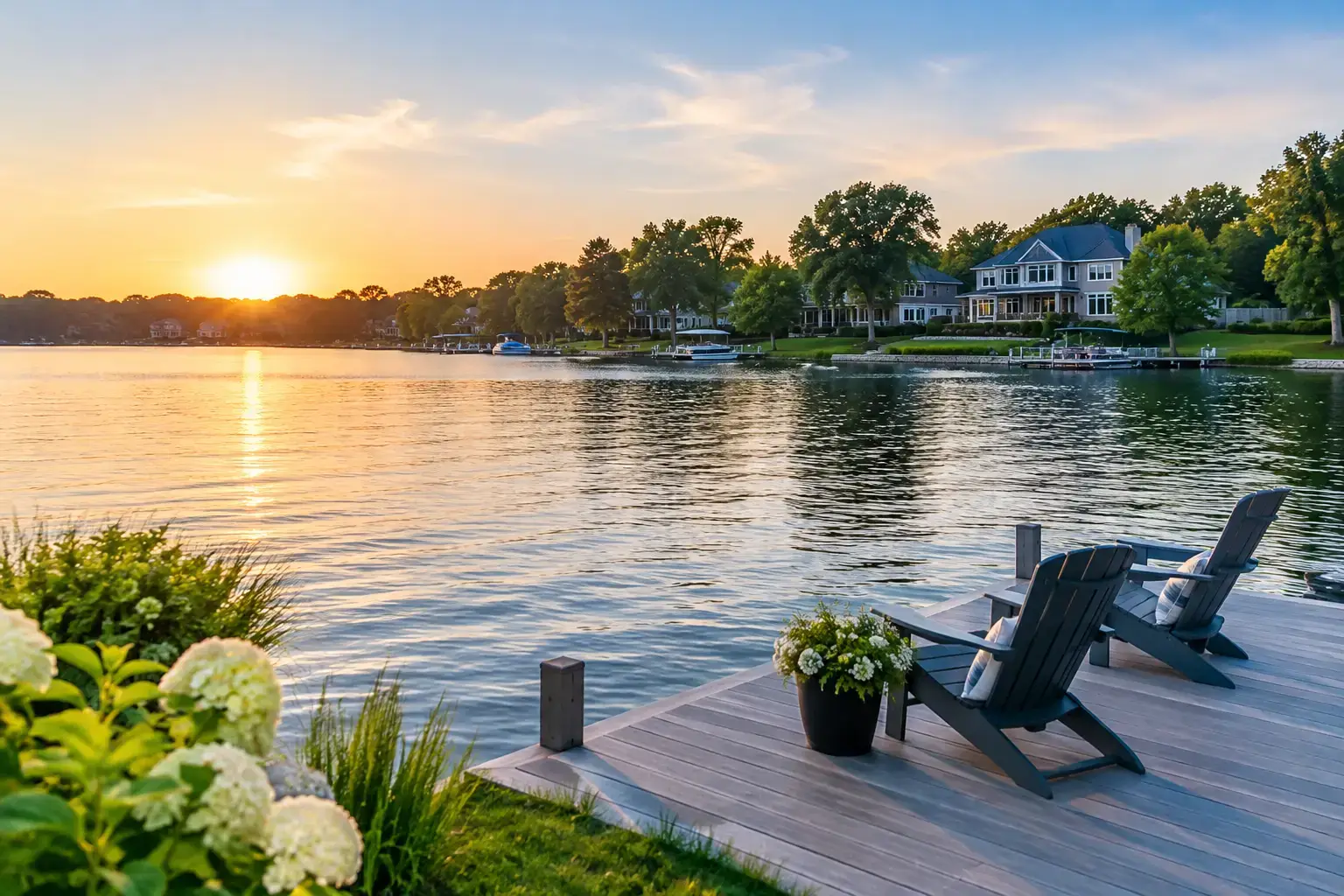
Pay attention to orientation. West-facing water views can create dramatic afternoon and sunset light, while they may also bring more heat and glare into rear rooms. A heavily wooded lot can offer privacy and shade but may require ongoing tree, slope, drainage, and seawall attention. These are not minor lifestyle details. They influence maintenance budgets and buyer perception when it is time to sell.
Verify the Shoreline Before Writing an Offer
Waterfront due diligence should begin early, ideally before negotiations are finalized. A standard property disclosure is useful, but it is not the complete answer to questions about shoreline ownership, dock placement, or past water intrusion.
Order or review a current survey when available. Confirm the lot lines, water boundary, easements, encroachments, and the location of improvements near the shore. A dock, retaining wall, boat house, patio, or fence may appear established while still creating a permit or boundary issue. If the listing describes lake privileges, request the documents that define them rather than relying on marketing language.
Also investigate whether the shoreline is natural, armored with a seawall, or supported by retaining structures. Seawalls and retaining walls can be significant capital items. Look for bowing, cracking, erosion behind the wall, leaning sections, deteriorated tiebacks, and signs of soil loss. Repairs may require permits, engineering input, contractor availability, and coordination with neighboring owners.
Water levels can change over time, and a shoreline that looks straightforward during one showing may tell a different story after heavy rain or seasonal shifts. Ask about drainage patterns, sump systems, backup power, basement moisture history, and insurance claims. If the home has a walkout lower level near the water, a detailed inspection is especially valuable.
Docks, Boats, and Permits Are Part of the Property
A dock is often treated as a visual feature in listing photos. In practice, it is an improvement with rules, costs, and maintenance needs. Determine whether the dock is included, whether it is owned or leased, and whether it will be removed seasonally. Ask about lift capacity, electrical service, condition, and the history of repairs.
Rules can vary based on the body of water and local or state requirements. Boat size, wake restrictions, launch access, mooring practices, and dock placement all deserve verification. A property may have direct frontage but limited practical docking options because of water depth, bottom conditions, shared boundaries, or restrictions.
For buyers planning renovations, do not assume a prior shoreline improvement can be expanded or rebuilt in the same configuration. Permits may be needed for seawalls, grading, tree work near the shore, dock changes, and drainage alterations. A strong offer strategy identifies those questions early enough to preserve your ability to inspect, negotiate, or walk away if the facts do not support the price.
Price Waterfront Homes Beyond the View
Waterfront pricing in West Bloomfield can vary sharply from one street to the next. Square footage and bedroom count matter, but they do not fully explain value. Buyers and sellers should look closely at usable frontage, lot depth, elevation, water exposure, dock conditions, interior updates, parking, road access, and the relationship between the house and the lake.
A renovated home with modest frontage can compete strongly with a larger but dated property if the outdoor layout is more functional. Conversely, a substantial home may need a pricing adjustment if the shoreline requires major work or the lake access is less direct than buyers expect. The most reliable comparable sales are properties with similar water rights and similar shoreline utility, not simply every sale near a lake.
For sellers, clear documentation reduces friction. Assemble surveys, association information, permits, dock details, utility records, improvement receipts, and any transferable warranties before going live. Waterfront buyers ask more questions, and prompt, accurate answers protect momentum during a showing cycle and inspection period.
Marketing should also be precise. “Lakefront,” “canal front,” “deeded access,” and “lake privileges” are materially different descriptions. Overstating access can create distrust and complicate negotiations. Strong positioning highlights the property’s actual advantages: frontage dimensions, views, dock setup, outdoor spaces, renovation quality, and documented access rights.
Inspection and Financing Considerations
Waterfront homes benefit from an inspection team that looks beyond the standard checklist. Depending on the property, that can include a general inspector, sewer scope provider, structural specialist, seawall contractor, electrician, roofer, and drainage professional. Older homes near water may have complex additions, aging electrical systems, shoreline settlement concerns, or stormwater challenges that deserve a closer look.
Financing can also require extra attention. Appraisers need relevant waterfront comparables, and an inaccurate description of the access type can affect the valuation analysis. Buyers using financing should keep underwriting timelines in mind while completing inspections and reviewing association or title documents. Cash buyers still need the same diligence. Skipping it may shorten the transaction, but it does not reduce the underlying risk.
Insurance deserves an early call as well. Ask an insurance professional about coverage availability, deductibles, water backup protection, shoreline-related exclusions, and replacement-cost assumptions. The goal is not to predict a problem. It is to know the carrying cost and protection structure before closing.
A waterfront purchase should feel exciting, but the decision needs to stand on documents, condition, and market evidence. Zamzam Realty can help buyers and sellers evaluate the details behind the listing language, negotiate from verified facts, and keep the transaction moving without cutting corners. The right waterfront property is not merely the one with the best first impression – it is the one whose access, condition, and value hold up after every important question is answered.


From the blog
Keep reading

Buyer Rate Locks: When Should You Lock?
Buyer rate locks can protect your mortgage payment while you shop, inspect, and close. Learn terms, costs, timing, and questions to ask your lender…

Best Questions for Listing Agents Before You Sign
Use the best questions for listing agents to assess pricing, marketing, negotiation, and communication before you sell a Metro Detroit home with confidence.

Detroit Housing Inventory and What Buyers Should Watch
Detroit housing inventory changes block by block. Learn how buyers and sellers can read active listings, price reductions, condition, and timing clearly.